Eleven pieces make one peak lapel
Ask any tailor which part of a blazer is hardest and they will say the lapel. It is a small area, but it carries the whole garment: it frames the face, it rolls over the chest, and it is the first thing you notice from across a room.
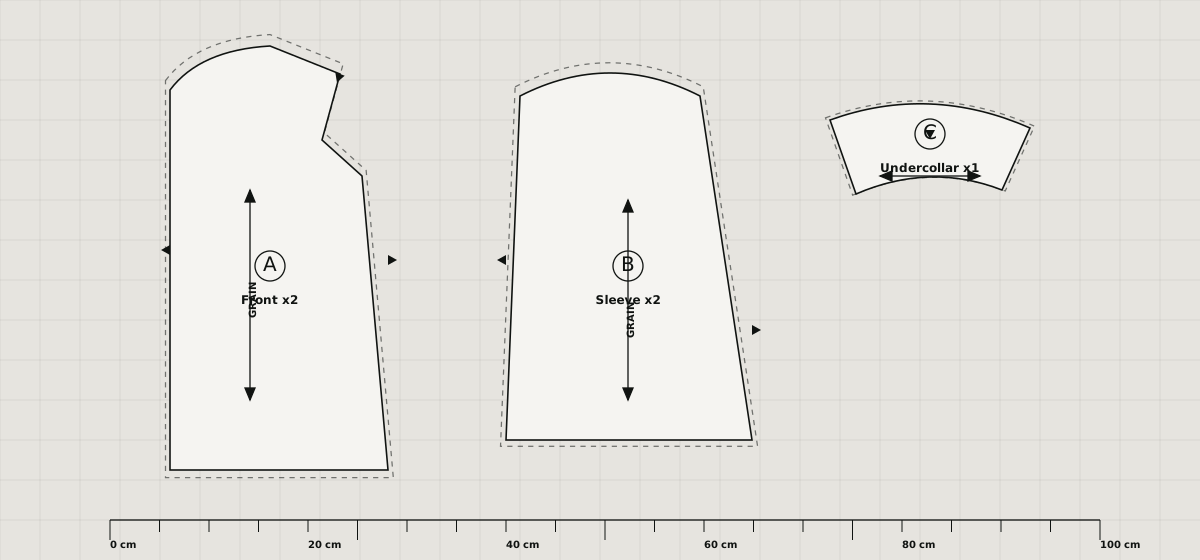
Ours begins as three pieces of paper. The front panel holds the shape of the chest and the line where the lapel will fold. The undercollar is cut on the bias so that it stretches into a curve. The canvas, a layer of horsehair and wool between cloth and lining, is cut by hand and shaped over steam.
The roll line
A lapel is not pressed flat. It is rolled. The tailor draws a line with chalk, pad stitches the canvas along it in small diagonal rows, and then lets the cloth fall into the curve it wants to take. See it on the blazer.
A good lapel should look as if it simply happened to fall that way.
What goes into it
- Pattern pieces11
- Pad stitches in the lapelabout 600
- Hours of hand work9
- Stitches to the inch, on the edge11
None of this shows from a distance. What shows is the result: a lapel that lies flat against the chest in the cold and does not curl after a season of wear.
See it in person
Book a fitting and a tailor will show you a lapel in progress, canvas and all.
Book a fittingIf you wear one of our blazers for ten years, it will be the lapel you notice first. That is the point.
3 comments
Lovely read. I had no idea the undercollar was cut on the bias.
Thank you, Daniel. It is the detail that surprises most people at a fitting.
Would you do a piece on the buttonholes next?